
-
How e-commerce has changed CRM

Despite the rapidly growing and changing environment of small businesses in general today, the main priority of business owners and management teams must remain focused on serving their customers and meeting their needs and service expectations. Without a loyal and respectable customer base, many companies would cease to exist. Strong customer journey optimization, backed with digitization and automation, is vital to continued growth and recovery for any business dealing with e-commerce order processing and increased customer satisfaction and retention.
E-commerce cloud systems are what form the foundation for online business operations today. Return customers, word-of-mouth recommendations, and loyal client bases will always be the foundation of strong businesses. It allows stability and security that aids in growth and scalability, even during difficult market swings.
Traditionally, it was often common to reward returning customers by providing appropriate discounts or friendly in-store service. This is more difficult to do in a completely digital environment where journey mapping, order routing, customer services, and overall business management does not respond well to manual processes.
To service customers correctly business owners have to look elsewhere and approach rewards, memberships, perks, and customer service in general from a digital e-commerce approach. Strong e-commerce order management processes can make all the difference, especially in a post-COVID-19 world.
Customer Relationship Management and e-Commerce
The primary means of CRM (Customer Relationship Managed) is to make sure your customer receives what they seek in an enjoyable manner. Traditional businesses keep records of frequently visiting customers to make sure their next visit will be a success, and they also take the time to choose a fulfillment partner that makes things easier in the long run.
Understanding the state of supply chains and other critical business components is the goal of customer journey optimization. The primary goal is to ensure everyone who visits a company website, makes a purchase, or requests information gets what they need as quickly and effectively as possible. In e-commerce, customer data is usually stored within big databases that accurately store all data of previous purchases.
This allows an e-commerce business to cater an online shopping experience exactly to a customer’s needs. According to Castillo (2021), most e-CRM software, order management systems (OMS), and e-commerce cloud platforms also have the ability to analyze your site’s metrics. This can be accomplished with the latest innovations in supply chain tools and shipping software and can assist with vital metrics such as: ,
- Conversion rates.
- Customer click-through rate.
- Inventory management options.
- Email subscription opt-ins.
- Which products customers seek out.
- Improved customer journey mapping.
- Better alignment with customer expectations.
These features provide e-commerce order management teams and business owners the ability to personalize customer’s shopping experience to great heights. In an era of individualism, making your customers feel wanted and important is essential. Giving your customers a shopping experience that is unique to them creates a feeling of wholesomeness and increases return rates significantly. It is the foundation that allows for strong customer journey optimization and allows for the benefits that follow as well.

Innovating CRM Options For Better Customer Engagement
The innovative and advanced CRM software currently out in the market has shown to be immensely beneficial to many e-commerce businesses. An important question follows, “how is an e-commerce business able to retain a high customer satisfaction ratio?”
High customer satisfaction rates are a result of correctly executed Customer Relationship Management strategies and a full integration of e-commerce cloud services.
Any business that aims to correctly manage its customers should aim for a personalized strategy that caters to business and the product/services in question. However, this does not mean that there are no general ways to improve your customer satisfaction rates. Any high-level marketing/sales academy teaches many of the coming principles as important for e-commerce businesses to create/maintain high-level customer satisfaction rates and improve customer journey optimization.
General Tips to Improve Customer Experience for E-Commerce
Surviving the e-commerce rush required quick scalability, reliable adaptability, and easy flexibility within the business structure. According to Insider Intelligence, looking at e-commerce order management and customer success stories over the past few years can show business owners where to focus and what steps to mimic for themselves. “Tech-savvy consumers looking for quick, seamless purchasing options will continue to lean on e-commerce throughout the next few years—and more consumers will jump on the bandwagon. We forecast US retail e-commerce sales will grow 16.1%, reaching $1.06 trillion in 2022….
Business-to-business (B2B) e-commerce statistics also show continued growth in 2022. Seemingly every aspect of business was moved or accelerated towards a digital structure amid the pandemic….Amazon’s influence in the e-commerce space is unmatched. The etailer boasts nearly 40% of all US e-commerce sales. Its US e-commerce sales will grow by 15.3% this year, reaching more than $3.6 billion. “
Business owners and managers can improve CRM processes, enhance customer journey optimization, and remain focused on meeting their customers’ unique e-commerce needs and demands regarding e-commerce cloud access by keeping the following things in mind:
- Keep it simple. Many new e-commerce businesses create the mistake of making their online shopping experience too complex. According to Santora (2020), 55% of shoppers abandon their virtual shopping carts due to unexpected shipping fees, unclear taxes, and time-consuming purchasing.
This statistic clearly shows that customers want their product with a simplistic shopping experience. A lack of transparency and an abundance of steps needed to complete a shopping process takes away from a customer’s shopping experience and forces them to leave their carts without purchasing.
- Value Feedback. The digital opportunities that come with e-commerce offer a myriad of possibilities when it comes to gathering customer data. It is important to document both your customers’ positive and negative feedback as these can be used to improve your e-commerce website/shopping experience.
Actually using your customers as fuel to improve your business is a core component of many big e-commerce businesses that are able to maintain loyal customer bases. Look at both the positive and negative feedback, take in what comes back frequently, and adjust your business accordingly. This will greatly improve supply chain responsiveness as it relates to the business.
- Multiplatform Support. Another way to improve your relationship with the customer base is to make sure your e-commerce business is optimized for all platforms. This can be interpreted in many ways.
Businesses must be optimized for all mobile platforms for instance (Apple/Android). Website quality deviation between platforms can be detrimental and exclude large parts of your customer base. This should be avoided as much as possible so the quality of between platforms should be checked frequently.
Improve E-Commerce Order Management and Customer Service With ModusLink
Many businesses struggle to keep up with the ever-changing market of online commerce, sales, and shipping involved with the circular economy of today. Maintaining the highest levels of customer journey optimization and customer satisfaction demonstrates how many business owners are ill-equipped for this. Along with improving digital processes on-site, many also decide to outsource their optimization to external professionals such as ModusLink e-commerce cloud service providers.
Are you interested in learning more about the latest developments regarding CRM operations, e-commerce order management, and e-commerce cloud services? Request a ModusLink demo today, and get started on the path to improved e-commerce sales and management.
Bibliography
Atchison, J. (2020, 18 november). How to Boost Customer Satisfaction on Your Ecommerce Website. Business 2 Community. Geraadpleegd op 16 januari 2022, van https://www.business2community.com/customer-experience/how-to-boost-customer-satisfaction-on-your-ecommerce-website-02363607
Castillo, D. (2021, 8 december). What is the role of customer relationship management (CRM) in e-Commerce? Sana Commerce. Geraadpleegd op 16 januari 2022, van https://www.sana-commerce.com/blog/what-is-the-role-of-customer-relationship-management-in-e-Commerce/
Ecommerce News Nederland. (2020, 7 december). CRM voor de ecommerce. Ecommerce News. Geraadpleegd op 15 januari 2022, van https://www.ecommercenews.nl/crm/
Santora, J. (2020, 7 november). 5 Cart Abandonment Stats to Help You Win “Lost” Sales Now. OptinMonster. Geraadpleegd op 15 januari 2022, van https://optinmonster.com/cart-abandonment-statistics/
-
What your e-commerce website needs

E-Business Website Essentials
A formal and high-quality suit, polished and fitting shoes, and a pleasant-smelling cologne or perfume. These three physical elements represent a professional and business-class image. Any experienced business professional knows the importance of appropriately conveying themselves through aftermarket support and other customer-focused and online retailer services. We all know appearance is crucial, and first impressions are critical in the business world. Physical appearance is the first thing people notice when meeting someone new. This goes for personal and business scenarios, but that impression is vital for the average business today, that impression is essential. It is made when a customer, or potential customer, first visits the official business website. Making a great first impression with an online store and contact point is critical to gaining a repeat customer! A robust cloud-based e-commerce platform and global portal access point online are vital to growing and expanding your business with digitization and automation and a complete e-commerce website.
Businesses with a strong, well-developed, and polished website tend to have better customer interaction and retention. Points such as global portal access, website layout, and content curation matter. Each one contributes to how people view and utilize online content. The bounce rate (the rate at which people close a website after opening) increases significantly when a website has not been tended to properly. This is a significant fact to keep in mind for businesses that get their website’s primary conversions/sales.
When looking at successful cloud-based e-commerce platforms, their websites are usually attractive to clients for the following reasons.
- Personalization – Successful e-commerce websites allow their website to adapt to their customer’s wishes and needs (partly)automatically. This enables customers to find more quickly what they are looking for and make the purchase, thus resulting in higher conversion rates. The ability to cater to a customer’s needs by offering tailored aftermarket support and cost-effective options is essential for an E-commerce website to succeed.
- Automation & Data Collection
An automated website that collects data from anyone who is active opens doors of opportunity when it comes to client retention and catering accuracy. Correct data acquisition and easy global portal access through a company’s website will allow business access to a more accurate knowledge of its current customer base. This will help them know how to tailor aftermarket support services. In turn, the business can advertise the shipment of goods and cater more precisely to current and future customers.
- Ease of Use – Nobody wants to spend hours on a website trying to find the right product. Complexity is not always your friend. When it comes to successful websites, online shop setup and utilization are very important to keep in mind. When websites become too complex, plenty of people give up when not being able to find the right product. Your E-commerce business should be defined and created with customer needs in mind. Ultimately, customer experience should be as simple as possible. From start to finish, the cloud-based e-commerce platform development and management process should be as streamlined as possible.
The need to improve
We are living in a fast-changing world. It is imperative to keep in touch with third-party logistics and customer needs. Enhancing and reinforcing your main point of contact (your website) is critical. It is also a crucial step aiming to attract and retain customers. The above three points mentioned will help to improve the global portal layout for any domestic or cross-border E-commerce company in the United States.
Many businesses, for scaling purposes, outsource their supply chain and operational activities to professional e-commerce companies, such as ModusLink. These companies use many tools to create and improve websites and offer customized aftermarket support opportunities. Some examples of impactful tools, e-commerce platforms, and CRM applications include the below:

Chatbots
Correct use of Chatbots and open-source digital features can elevate your E-commerce website to new heights. Chatbots are known to yield increased customer satisfaction rates. This can be seen through their increase in popularity and uses.
Chatbots are now part of many call centers, E-commerce businesses, cloud-based e-commerce platforms, global portal hubs, and established companies. Chatbots are often implemented as a first point of contact/help before reaching customer service to determine the customers’ needs and questions better. However, many of today’s popular chatbots even provide other services that allow them to be more flexible (Neusser, 2021).
24/7 Assistance
Automated responses and real-time data processing are more than just popular logistics terms. They help improve any E-commerce website as they can be operational all day, every day of the week. The ability to aid customers with their basic needs without needing human interaction always helps everyone.
Team members can improve response times, and customers enjoy automated assistance with basic needs or concerns they have. The extent of management effort is directly linked to the ability of cloud-based e-commerce platforms and websites to help customers access the information they need when they need it..
Shipping and Delivery
Aside from aiding customers with basic questions, digital media and global access websites can provide accurate information to customers. Critical points for shipping and transportation services can easily be accessed and reviewed online without the need to speak to a customer service rep every time. Questions about shipping and delivery or order status tracking can also be implemented within a chatbot. This allows for even greater flexibility within cloud-based e-commerce platform operations. It will enable e-business owners and managers more insight into customer service teams. This in turn gives them more time to focus on complex customer questions/demands with cloud hosting and digital commerce solutions and services.
Establishing appointments
Cloud-based e-commerce platforms can also set up physical or online appointments with customers should the need be there. Customers can use online chatbots and automated request forms to look for quick Q&A assistance. This also allows customer service teams to contact the customer later to set up an appointment. However, this method does require strong anti-bot detection measures in place or some sort of security protocol in place. It all will help sort through messages for logistics terms and to scan for spam and other harmful information.

Improve Aftermarket Support With ModusLink
Would you like to know more about the latest developments regarding e-business tools? If you are ready to learn more about cloud-based e-commerce platforms we are here. It is time to understand how global portal and website access can improve customer retention; the answers are waiting for you. Connect with ModusLink expert to learn more today.
Bibliography
E-Business – Technology and Networks. (z.d.). sideplayer. Geraadpleegd op 13 januari 2022, van https://slideplayer.com/slide/8765285/
Neusser, S. (2021, 9 december). Technologies every e-commerce site needs. Sana Commerce. Geraadpleegd op 10 januari 2022, van https://www.sana-commerce.com/blog/technologies-used-in-ecommerce/
Rahman, S. (z.d.). GRIN – Introduction to E-Commerce Technology in Business. Grin. Geraadpleegd op 11 januari 2022, van https://www.grin.com/document/280494
Willas, S. (2021, 17 december). 5 E-commerce Technology Trends That Will Shape The Future [2022]. MoEngage Blog. Geraadpleegd op 13 januari 2022, van https://www.moengage.com/blog/5-e-commerce-technology-trends-that-will-shape-the-future/
-
The Omnichannel Supply Chain: Traditional VS E-Business

There is no denying that things have changed in the last two to three years. Aside from COVID and the disruptions, the nature of business and commerce has changed. More companies and businesses are moving from traditional brick-and-mortar buildings to online e-business platforms. This leads to the need for omnichannel supply chains, and omnichannel e-commerce options have never been more vital for smooth digitization and automation. Read on why working with an omnichannel 3PL company is the best option to grow your e-commerce business.
E-Business vs Traditional Brick & Mortar
In the current world of fast-growing, innovative technology, change is inevitable. It is sometimes challenging to keep up with all the new, highly impactful technology released over time. Despite the changes within individual technology, changes are also happening on a bigger scale. The very nature of many businesses has changed with the increasing popularity of E-commerce. This shift is driving the need for omnichannel 3PL company partnerships throughout the industry.
According to Shopify’s Future of Commerce report, 53% of retailers are adopting tools to help them sell in various channels. Shopify’s survey also found the biggest challenge among 49% of respondents for brands that want to implement an omnichannel strategy is “breaking down organizational silos between digital and physical stores.” Another 47% say integrating online and retail store data and operations will “prove difficult.”
E-commerce has allowed businesses to massively improve their lead times. In addition, performance for E-commerce businesses has been achieved at a much better rate than traditional businesses. Due to these results, it is no surprise that many companies are switching their nature/structure from traditional business modes in favor of a more omnichannel supply chain-based approach. While online service and outsourced fulfillment partnerships are not new they are becoming more mainstream, especially as recovery and growth continue.

E-Business/E-Commerce
According to Kaur (2021), E-business practices relate to businesses that include activities through the
According to Kaur (2021), e-business practices relate to businesses that include activities through the Internet. Business activities include (but are not limited to) industry, commerce, and trade. Managing omnichannel 3PL companies , omnichannel fulfillment, and e-commerce service providers also includes many nuanced aspects.
These include planning, organizing, production, marketing, and more, all through the internet. Most people and business parties do their activities electronically. These emerging modes of business are driven by omnichannel e-commerce, digitalization, and automation. The goal is to improve business strategies and performance while offering customers a seamless experience while doing business with any individual company or location.
In e-commerce, goods can be purchased 24/7. This gives customers around the globe a massive advantage as there are no restrictions regarding opening/business hours and time differences. This change alone massively increases a business’ potential customer pool, resulting in many traditional businesses incorporating this aspect of e-business. Omnichannel 3PL company services provide more significant benefits in buying goods and services quickly with cross-border service opportunities (Thakur, 2021).
Traditional Business
The traditional business primarily refers to a physical instance (e.g., shops/stores) that provides a specific good/service to its local customers in exchange for the corresponding currency. Traditionally, businesses have operated solely on a cash-based business model. Even as the popularity of credit cards has grown, cash is still preferred at brick-and-mortar shops. However, that is not an option online and has pushed businesses to adapt to cashless and digital payment processes. Omnichannel supply chain reworking is part of today’s growth and recovery process for industries across the board.
Operating costs are usually relatively high as it takes a lot of investment to keep a physical place running correctly. e-businesses do not need to hold a physical unit, giving them freedom (Kaur, 2021). Furthermore, traditional commerce started at the time of the barter system, which was introduced long ago.
This system covers the essential supply and demand principle. The exchange of goods for other goods is the foundation of any business model. And it does this without the introduction of money (as this was not introduced yet in the early times). All e-commerce businesses need to improve traditional approaches. Embracing automation and digitalization is essential for all e-commerce companies.
Nowadays, businesses have advanced to a more modern model with the element of cash and physical instances being more flashed out. The introduction of e-commerce in the early 20th century decreased the popularity of brick-and-mortar stores in favor of an omnichannel e-commerce approach with online stores, platforms, and e-commerce websites (Thakur, 2021).

Benefit E-Business
As mentioned before, the introduction of e-businesses has forced many companies to change their core business model due to the immense benefits yielded when doing so, including the below benefits. (Faris, 2019)
Decreased Startup Costs
Starting a new business often comes with high initial investment costs. This is especially true when starting a brick-and-mortar retail store. Think about money needed for furniture/displays/thematic elements/personnel/customer care/office space etc. If your business is starting to gain traction, you also need to think about upgrading and including a conference room.
Location Freedom and Flexibility
People can start E-businesses from anywhere they would like to, so to speak. The necessary requirement of a website is an investment, but a much lower investment compared to a Traditional Business.
Shipping and warehousing are also part of your primary initial investment as the network needs to be robust when starting to avoid initial complications and delays. Partnering with experienced omnichannel 3PL company experts can help speed up the process and make it easier to get started when and where business owners want and need.
Easier Staffing
If you have a traditional business, a lot more staff is required when wanting to manage your business effectively. You need people for HR/administrative reasons, logistical reasoning, customer services, etc.
M-commerce businesses need only a few people to start merely for managing orders, as much can be done online. Startups often outsource their whole supply chain/operating channel to other companies that work in Ecommerce Fulfillment from start to finish. This gives E-Businesses immense leeway regarding resource management.
Transparency in Omnichannel Operations
Omnichannel supply chain operations are a challenge for both traditional businesses and e-businesses. The critical difference is that e-businesses gain the advantage of clarity by being able to manage and overview all the step-by-step operations online. This can often reduce lead times by a significant amount. Shipping and transportation logistics plays a huge role in traditional commerce and e-commerce balance.
Partner With Omnichannel 3PL Company Experts Today
Businesses that conduct e-business should also consider outsourcing their shipping logistics and CRM needs to professional third-party industry experts. These experts often handle the whole fulfillment process very efficiently.. See how omnichannel 3PL company services and omnichannel supply chain operations impact traditional and e-business models today in real time by choosing ModusLink. Contact ModusLink today to learn more about omnichannel e-commerce opportunities and how your team can apply better e-business practices today.
Bibliography
Shopify, (2021, September 27) Future of Retail Accessed October 17, 2022 From https://www.shopify.com/research/future-of-commerce/future-of-retail
F. (2021, February 4). Updates, Insights, and News from FutureLearn | Online Learning for You. FutureLearn. Retrieved December 10, 2021, from https://www.futurelearn.com/info/courses/digital-transformation-e-commerce/0/steps/186161
Faris, S. (2019, March 16). Traditional Business Vs. E-Business. Small Business – Chron.Com. Retrieved December 10, 2021, from https://smallbusiness.chron.com/traditional-business-vs-ebusiness-12563.html
GeeksforGeeks. (2021, August 5). Difference between Traditional Commerce and E-commerce. Retrieved December 9, 2021, from https://www.geeksforgeeks.org/difference-between-traditional-commerce-and-e-commerce/
Kaur, A. (2021, July 10). Difference between E-business and Traditional business. Tutor’s Tips. Retrieved December 9, 2021, from https://tutorstips.com/difference-between-e-business-and-traditional-business/
Thakur, M. (2021, July 10). E-commerce vs Traditional commerce. EDUCBA. Retrieved December 9, 2021, from https://www.educba.com/e-commerce-vs-traditional-commerce/
-
IOT SupplyChain Tools (Internet of Things)
The supply chain network today has been under more pressure than ever before, and it is not just COVID-related disruptions impacting every aspect of shipping and legacy logistics. Supply chain management is a complex and often confusing process that requires careful planning and monitoring of the network. The importance of digitization and automation today cannot be underestimated.
According to a 2019 review from The International Journal of Product Research “supply chains are operating under an ever-changing environment and are vulnerable to a myriad of risks at all levels. This environment is an ever-changing landscape because of many factors. Many supply chains extend over wide geographical areas and are vulnerable to global risks.
Customers are increasingly demanding in terms of product customization, price, and level of service.” Improving, supply chain optimization and updating routine processes and procedures are critical to maintaining a competitive advantage today.
Added to this is the increasing complexity of goods and products, making it more time-consuming to package, handle, and ship popular items. The rapid technological changes, the continuous introduction of new products, the changing service provided by logistics providers, and shifting market demands keep the supply chain under pressure.
And on top of all that, changing climates- weather and global conflicts- puts global supply chains under increasing pressure. Warehouse automation, delivery tracking, and digital shipping services help to offset these sorts of obstacles for shippers, M-commerce managers, and transportation service providers.
The fastest and most effective way to combat this is to improve tracking and monitoring services with innovative tech and tools. Many of the electric devices/sensors that are applied to intelligent packaging use the global interconnected network.
The concept of IoT (internet of things) within warehouse operations and shipping logistics is quite complex. It is aimed at providing global corresponding network infrastructure and improved supply chain optimization for connecting objects to the cyber-physical world.

The utilization of IoT tools (Internet of Things)
Many of the electric devices/sensors that are applied to smart packaging use the global interconnected network called the Internet of Things. The concept of IoT (internet of things) is aimed at providing a global interconnected network infrastructure for connecting objects to the cyber- physical world. It enables companies to track and trace their products which are equipped with sensors devices (Cheung, 2018).
IoT Tools- A Logistics Providers’ Friend
The main IoT tools are elaborated upon below.

RFID (radio-frequency identification): is an electronic sensor and data collecting system using RF signals located on packages to monitor critical parameters such as temperatures, pressure, and vibration which captures and communicates data about how the products are moving along the supply chain and enable organizations to track and trace the product during its journey from manufacturer to customers (Cheung, 2018). The use of smartphones to increase the supply chain visibility and anytime access by using available handled devices is quickly standardizing for companies’ solutions. The technology is optimal to track products that are in transit (Fedex, 2020).
Traditionally, inventory counts were a complex exercise done manually about once a year but RFDI technology enables retailers such as Macy’s to monitor stock monthly bringing accuracy from 60% to over 90%. Macy’s reported that it experienced 2-3% inventory inaccuracy per month which is 24% annually but by implementing RFID solutions it minimized out-of-stock situations, provides real-time merchandise location data and allows to track their inventory throughout the retail supply chain (Bianchi, 2017).

This is non-contact near-field communication technology. NFC reader is a tool that can be integrated into the warehouse management picking verification system. The benefits of using such technology are widespread for customers, retailers, shippers, and logistics providers. Its ability to sync with smartphones and mobile devices helps improve delivery. NFC enabled devices are increasingly popular in today’s shipping lanes.
Enhanced supply chain optimization allows faster communications, automated updates, and push notifications to be sent in real-time between fulfillment partners and e-business owners. Furthermore, it helps eliminate the paperwork and provides information about the inside of the package. This can include the location of the product inside the warehouse, the description of the item, and the number of items inside the warehouse.
Customers who have an NFC chip or NFC tag enable phones to read information from the NFC on the label with additional information about the product and find out if the bottle was in some way misused. It also allows the company to track the product during the whole supply chain, storage, and opening times (Vasić, 2018).

Barcode label:
Plenty of processes involved in shipping and logistics today rely on administrative documentation and legacy logistic basics. Using these barcodes and rack labels save a lot of time for the different employees and managers involved in the process.
The packing and picking process is simplified as they only need to scan the barcode and receive all the required information about a given product instantly. The barcode label also benefits in managing inventory by tracking the exact location and movements of products. They can even make inventory management easier in the long run.
This applies to whether the movement is in or out of the warehouse facility. All this improved tracking helps to eliminate delays and errors. Barcode labels are usually called the foundation of automated warehouses. It was the first data tracking technology and referred to one-dimensional data, meaning that they can only hold information in the horizontal dimension.
They provide several crucial benefits such as inventory tracking, arrival planning, and improved picking efficiency. Areas such as traffic optimization decreased human data entry errors, and reduced out-of-stock situations also see great improvement (Jules, 2020).
Figure 1Vasić, Đ. &. (2018). NFC Technology and Augmented Reality in Smart Packaging.
The table above compares the different CRM technological devices in terms of speed, scalability, devices needed, sensing distance, and error rate. It is obvious that compared to the verification systems, the manual work is slower, and error rates are high, giving more work for logistics providers (Vasić, 2018). A strong supply chain management software platform can make all the difference in the world!
Improve Shipping Tracking and Delivery With a Strong Logistics Provider
All the different devices result in advantages for supply chains through the use of IoT tools and help companies in their daily operations. From e-commerce websites to handheld devices to remote networking and logistics, every step of the process can be improved with the right logistical approach.
Although the initial cost concerning new sensor technologies is high, the inherent opportunities incentivize companies to invest in the integration of IoT. Whether it is barcode automation, NFC forum platforms, or RFID tools, innovations are helping companies offer better shipping options for their customers. The e-commerce challenges facing companies today are only going to intensify as demand continues to grow.
Having a strong and reliable supply chain management SCM in place can help shippers, retailers, and customers reap the benefits of digitalization. Would you like to know more about how ModusLink can implement IoT tools when managing logistics providers and see how easy it can be to improve supply chain optimization? If so, then contact ModusLink today to get started!
Bibliography
Bahron, Zied and Ben-Daya, Mohamed (2022 November) Internet of things and supply chain management: a literature review Accessed October 18, 2022 From https://www.researchgate.net/publication/321131587_Internet_of_things_and_supply_chain_management_a_literature_review
Aliakbarian. (2019, February 20). Smart packaging: challenges and opportunities in the supply chain. Retrieved from supplychainquaterly.com.
Bianchi. (2017, June 28). 5 Examples of Innovative Uses for RFID Technology in Retail. Retrieved from shopify.com.
BioSpectrum. (2012, July 16). Packing smart for better reach of vaccines. BioSpectrum digital edition. Retrieved from https://www.biospectrumasia.com/.
Cheung, S. &. (2018). Smart Packaging: Opportunities and Challenges. University of Liverpool & University of Northumbria, Department of Mechanical and Construction Engineering & Division of Industrial Design. Liverpool: Elsevier.
Choudhury. (2018, April 05). Top Benefits of Smart Packaging for Packaging Companies | Infiniti Research. Retrieved from Infinity research.
Emprechtinger. (2019, April 18). 5 things you should know about smart packaging. Retrieved from lead-innovation.com.
Fedex. (2020). Tracking Technologies Are the Cornerstone for a Competitive Supply Chain Strategy. Retrieved from Fedex.com.
FreightPOP. (2019, September 3). Barcodes, QR Codes, & RFID In Supply Chain Management. Retrieved from freightpop.com.
Hou, L. &. (2016). The Application of NFC Verification System in Warehouse Management System. South China University of Technology, School of Computer Science and Engineering. Guangzhou,: Atlantis Press .
impacx. (2020). What is smart packaging and its benefits? Retrieved from impacx.io. Jules. (2020, April 8). warehouse automation 101: a complete guide. Retrieved from easyship.com.
Pagliusi, J. &. (2020). Roadmap for strengthening the vaccine supply chain in emerging countries: Manufacturers’ perspectives. Elsevier.
Regattieri, S. &. (2013). The Important Role of Packaging in Operations Management. In Operations management .
Richelle. (2021, January 11). Smart packaging. (Boulanger, Interviewer) Thrams. (2020, November 25). Big Benefits of Smart Packaging
Retrieved from primarypackaging.com.
Vasić, Đ. &. (2018). NFC Technology and Augmented Reality in Smart Packaging. University of Novi Sad, Faculty of Technical Sciences., Department of Graphic Engineering and Design. International Circular of Graphic Education and Research.
Ward, h. &. (2019). Rethinking packaging. DHL , Supply chain department. DHL Customer Solutions & Innovation Represented by Matthias Heutger.WHO. (2020). Bar-codes, QR codes and Vaccine Vial Monitors in the context of COVID-19
vaccines. World Health Organization.
-
Drones in Supply Chain

Introduction –
Of all the systems involved in shipping and transportation services today, automated processes for delivery and logistics remain among the most critical. Looking at the future of shipping service providers as well as the future of drones is a fascinating aspect of the modern supply chain network. It all comes down to digitalization and automation.
The evidence of the increasing popularity of supply chain automation is pushing companies to research even more performant alternatives that will keep boosting the efficiency of robots inside supply chains. The many benefits that come with omnichannel logistics and automation are the reason why new and higher productive technologies are surging among high-tech drone companies.
According to the experts at Supply Chain Digital, “The potential for drones as powerful business tools is huge. For supply chains, drones can be used in warehouses to increase the accuracy and efficiency of inventory management through to last-mile delivery.” Big companies around the world have started to integrate drones into their supply chain over the past years to help manage their inventory.
The drones are designed to assist human workers indoors and benefit large organizations with stationary stock. Companies that deal with a large amount of inventory often find omnichannel logistics challenging when it comes to locating items inside the warehouse.
Therefore, aerial inventory drones can benefit many prominent organizations in finding the right items inside the warehouse and cutting their inventory carrying costs. The drones have sensors, scanners, and cameras to monitor and track inventory visibility and availability.
The aim of integrating this automated drone technology with delivery and logistics is mainly a concern with accuracy as drones should be more efficient and precise than humans. Additionally, camera drones can verify e-commerce deliveries and other milestones in real time without waiting for human intervention.
So far, implementing drones into supply chains has been great, and drones are becoming quite popular. This is largely due to their capability of flying around, avoiding obstacles, navigating indoors, and operate in fleets with direct distribution (Dronevideos.com, 2018). The collection of aerial data and navigational insight also helps boost the popularity of drones today.
Benefits of Drones- Delivery and Logistics
Several benefits can be identified while using indoor drones. First, the human workforce will potentially hold fewer hazardous tasks, and no ladder climbing or dangerous inspections anymore. There is a fast return on investment due to the manageable acquisition cost of hardware associated with this type of omnichannel logistics.
Secondly, the reliable/stable software can enable fully autonomous indoor navigation and automatically scan barcodes. Despite these promising positive effects that drones bring to a warehouse, many negative side effects regarding e-commerce solutions must be overcome. These include issues, such as inventory service costs and warehouse space management concerns, and more..
Limitations of Drones for Logistics
The limited flying area and the many obstacles inside the warehouse make the process complex. Furthermore, integrating the drones into the existing process makes it time-consuming and sometimes unsafe due to potential drones failures such as battery explosions. The maintenance and reparation costs also take into consideration resulting in some delays or downturns.
Analysis of direct distribution with drones has also shown that automated systems often suffer from the “garbage in,” and “garbage out” issues. When inventory gets lost, drones cannot prevent it, identify it, or resolve it. Despite all the benefits that drones can bring, a few adjustments still need to be studied, analyzed, and fixed to enjoy and operate the drones inside omnichannel logistics and automated supply chains fully.
Furthermore, the future might worry workers as they feel targeted and soon stand the risk of being replaced by more efficient and accurate drones (Maghazei, 2019). On the contrary, drones could also be an opportunity for workers to be trained and taught about new systems. They must know how to manage/supervise these drones and receive more specific assignments related to delivery and logistics. This will merely shift the work dynamic and prevent job loss and turnover within the global supply chain.
Limitations of Drones for Logistics
What the Future Holds for Omnichannel Logistics With Drones
Nowadays, automated supply chains are revolutionizing and reshaping the fulfillment process. The number of drones integrated inside warehouses into daily operations is booming. In general, technologies such as barcode labels, automated guided vehicles, automated storage and retrieval, and automated mobile robots are the near future for most global supply networks. These can aid in both forward and reverse logistics and keep the supply chain operating efficiently.
Despite the many benefits such as time-savings, increased accuracy, error reduction, cost-saving, better productivity, efficiency, and more space created, the human workforce is worried about their future as robots start to replace them.
Many disadvantages still need to be overcome regarding omnichannel logistics; even if the availability of affordable drones is increasing, the initial investment remains high, at least for most companies. Not to mention the regular maintenance check cost, repairs, and the training of the workers who do not especially know how to use specific drones.
Even though drones can operate autonomously within direct distribution tasks, it is still essential for workers to understand delivery and logistics protocols to not form supply chain bottlenecks along the way.
A massive boom in technology has happened, and drones are showing strong potential in performance capabilities. This makes it easier for service providers to meet customer expectations while better managing opportunity costs and profits.
The indoor drones which are being analyzed and studied for full implementation will be another essential step for automated supply chains as they will be able to bring many positive effects, such as a fast return on investment. However, innovation is still essential as changes will need to be made for them to be fully operational.
Improve Delivery and Logistics With Help From ModusLink
Despite the necessary adjustments, the rapid growth and advancements in innovative drone technology illustrate a bright future. Would you like to know more about omnichannel logistics, drones, and how to integrate modern tech within your supply chain? Contact one of ModusLink’s Industry experts today to get started with improved delivery and logistics!
Bibliography:
Ashcroft, Sean (2022, February 02) Drone use in supply chain about to take off, Accessed October 16, 2022 From https://supplychaindigital.com/logistics/drone-use-in-supply-chain-about-to-take-off
Baker, P. &. (2007). An exploration of warehouse automation implementations: cost, service and flexibility issues. Academic paper.
Banker. (2019, March 11). The Autonomous Mobile Robot Market Is Taking Off Like A Rocket Ship. Forbes.
Bonn. (2016, June 06). DHL employs robot as picker’s best companion. Retrieved from DHL.com.
Bowles. (2020, November 18). Warehouse robotics: everything you need to know in 2019. Retrieved from Logiwa.com.
Bridger. (2015, October 8). Upgraded cold storage AS/RS boosts Americold’s productivity, labor efficiency. Retrieved from refrigeratedfrozenfood.com.
Croxton. (2003). The Order Fulfillment Process. The Ohio State University. The international journal of logistics.
Dronevideos.com. (2018, September 4). Companies Using Drones In Their Warehouses For Inventory Control & More. Retrieved from Dronevideos.com.
Jules. (2020, April 8). warehouse automation 101: a complete guide. Retrieved from easyship.com.
Koster, A. &. (2017). Robotized Warehouse Systems: Developments and Research Opportunities. Research paper, Rotterdam School of Management, Erasmus University, The Netherlands, School of management, Rotterdam.
Maghazei, W. &. (2019). Applications of drones in warehouse operations. Academic paper, Swiss Federal Institute of Technology Zurich, Chair of Production and Operations Management Department of Management, Technology and Economics, Zurich.
MMH. (2018, March 23). FedEx partners with Vecna Robotics as part of automation growth strategy. Retrieved from mmh.com.
Monroy. (2020, August 28). What is warehouse robotics . Retrieved from 6river.com. Richelle. (2021, January 11). Smart packaging. (Boulanger, Interviewer)
Romaine. (2020, September 15). Pros and cons of AS/RS for warehouse automation. Retrievedfrom conveyco.com.
UPS. (2020, April 23). UPS Pressroom . Retrieved from pressroom.ups.com. Wilson. (2020, February 6). The future of logistics warehouses . Retrieved fromsupplychaindigital.com.
-
COVID 19 The State Of Supply Chains (Part 2)
The shutdowns and disruptions from COVID-19 outbreaks have forever changed the way consumers, retailers, and suppliers work and operate. And the problems created are still being dealt with throughout the supply chain. Companies must accelerate global strategies to customer service and inventory planning processes and management.
It is crucial to understand the problems faced within the global supply chain when it comes to being able to meet customer expectations, contract supply issues, and demand concerns. E-commerce challenges continue to pose a problem as ongoing growth and recovery efforts continue. And those problems will only continue. According to the United Nations Conference on Trade and Development (UNCTAD), COVID-19 pushed e-commerce to $27.6 trillion by early 2021.
Transportation companies must understand why these problems had a significant impact on supply chains across many different companies. It is only when issues and their origin are understood in detail, effective and adequate solutions can be implemented to prevent the return of future negative effects within global commerce.
Now that the negative effects are known and understood to a degree, companies are starting to implement countermeasures. The leading issue supply chains across companies have issues with coping with the impact of the pandemic lies at the current/prior resilience level.
Companies that wish to accelerate global demand planning and supply chain operations need to focus on known issues and improve end to end resilience.
The first part of this article described the negative effects on Supply Chains as a result of COVID-19. It is crucial to understand the problems faced and the reasoning as to why these problems had a big impact amongst Supply Chains across many different companies. It is only when problems and their origin are understood in detail, effective and adequate solutions can be implemented to prevent the return of future negative effects.
Now that the negative effects are known and understood to a degree, companies are starting to implement counter measures. Of course, the type of measure implemented depends on the specific company in question. However, the main issue Supply Chains across companies have issues with coping with the effects of the pandemic lies at the current/prior resilience level. Supply Chains simply did not invest sufficiently in the resilience element to minimize these negative effects. Now, how can companies specifically improve their Supply Chain Resilience?
How Can Companies Improve Their Supply Chain Resilience?
The pandemic will not disappear anytime soon. To improve resilience, companies require steady, start-to-finish appraisal and enhancement, and observation. Robust global commerce analytical systems must monitor constant changes in the marketplace to ensure optimal order processing by a fulfillment partner.
Strong analytical capacity will allow companies to understand the complexity of contract supply better, anticipate potential disruption, and quickly develop a response (BizClik Media, 2020).
See the figure below for a clear visual on how to improve supply chain planning and supply chain processes in a structured way.
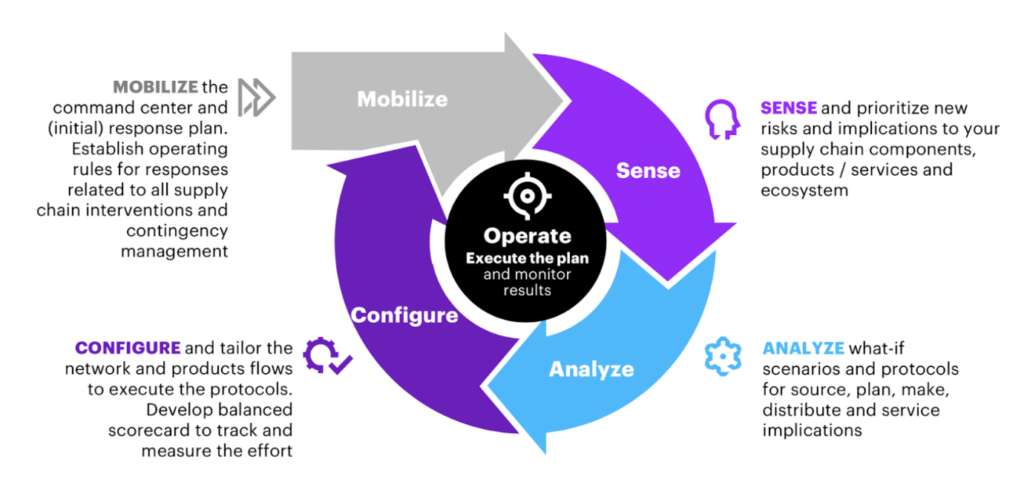
Figure 1 Operate – Execute – Monitor Cycle (Resilience) https://supplychaindigital.com/supply-chain-2/accenture-building-supply-chain-resilience-amidst-covid-19
Steps to Accelerate Global Supply Chain Performance
Let’s create a scenario on how to improve the Supply Chain’s resilience using the diagram above. Remember, the end goal of increased Resilience is necessary to enable and increase a company’s ability to respond accordingly to unexpected changes within the demand/marketplace.
Supply chain management is all about looking for ways to improve key performance metrics. The following steps can help in short term and long term goals.
Step 1: Mobilize
To counter unexpected changes in demand, an initial response plan must be in place that holds specific operating rules. For instance, if demand rises above level X%, automatic notifications must be sent to suppliers A/B to deliver new products on time.
These resilience supply parameters can be established based on safety/stock margins resulting from product priority and lead times to accelerate global metrics. Regular flow and depreciation value also play essential roles in determining these specific parameters.
Step 2: Sense
After creating the fundamental counterplan, risks and implications on the Supply Chain must be identified and analyzed as soon as possible. For instance, if Supplier A uses a specific raw material to create a product known to become scarce upon demand increase, inform yourself about alternatives that enable product delivery past these scarcity levels.
Diversify risks by looking for ways to counter transportation costs and concerns in global commerce, production, and delivery. This is critical for domestic, global, and cross-border processes.
Step 3: Analyze
It is essential to analyze ‘what-if’ scenarios in case of unexpected plan failures. It is best to review these plans and procedures every couple of months, depending on the company, to ensure their validity.
Furthermore, having multiple perceptions on/off the scenarios and solutions may contribute to increased quality and resilience. The more a company asks itself what if x will happen, especially when analyzing contract supply metrics for inventory levels and product designs, the better the understanding of the possible unexpected obstructions.
Step 4: Configure
This final step of this never-ending cycle should include the configuration of the entire counter process. All steps/elements needed to facilitate the counterplan should be in place. New transport/backup modalities, alternate materials, backup machinery, etc.
The more extensive the preparation, the better. This last step ties in with the third analysis step, as the potential disruptive scenarios accelerate global configuration needs.
Improve Global Commerce Performance With ModusLink
After continuous focus on Supply Chain optimization to minimize costs and improve efficiency across the board, COVID-19 clearly illustrates that many companies are not fully aware of the vulnerability of their supply chain relationships to unexpected Global changes within the marketplace/demand (Deloitte, 2021).
Fortunately, new digitalized Supply Chain technologies are showing potential to drastically improve the visibility across the end-to-end supply chain. It is clear that the current linear model of Supply Chains was not sufficient to be resistant to such global changes as the pandemic. Technologies such as the Internet of Things, artificial intelligence, AVG (Automated Guided Vehicles) are designed to anticipate and meet future challenges.
Would you like to know more about the state of Supply Chains moving forward? Stay tuned for our next Blog where we will go more in-depth or talk to a ModusLink Expert today by clicking here!.
Bibliography:
(2021, May 3). Global e-commerce jumps to $26.7 trillion, COVID-19 boosts online sales, Accessed October 20, 2022 From https://unctad.org/news/global-e-commerce-jumps-267-trillion-covid-19-boosts-online-sales
BizClik Media. (2020, May 17). Accenture: building supply chain resilience amidst COVID-19. Supply Chain Digital. Retrieved November 27, 2021, from https://supplychaindigital.com/supply-chain-2/accenture-building-supply-chain-resilience-amidst-covid-19
COVID-19: Managing supply chain risk and disruption. (2021, October 5). Deloitte. Retrieved November 26, 2021, from https://www2.deloitte.com/global/en/pages/risk/cyber-strategic-risk/articles/covid-19-managing-supply-chain-risk-and-disruption.html
G. (n.d.). What impact has COVID-19 had on supply chains & responsible sourcing? Greenstone. Retrieved November 26, 2021, from https://www.greenstoneplus.com/blog/what-impact-has-covid-19-had-on-supply-chains-responsible-sourcing
Gilkey, J. G. (2021, May 1). The challenges and realities of retailing in a COVID-19 world. Researchgate. Retrieved November 28, 2021, from https://www.researchgate.net/publication/351656064_The_challenges_and_realities_of_retailing_in_a_COVID-19_world_Identifying_trending_and_Vital_During_Crisis_keywords_during_Covid-19_using_Machine_Learning_Austria_as_a_case_study
Harapko, S. H. (2021, February 18). supply-chain. Ey.Com. Retrieved November 26, 2021, from https://www.ey.com/en_gl/supply-chain/how-covid-19-impacted-supply-chains-and-what-comes-next
Meyer, A. (n.d.). The Impact of the Coronavirus Pandemic on Supply Chains and Their Sustainability: A Text Mining Approach. Frontiers. Retrieved November 26, 2021, from https://www.frontiersin.org/articles/10.3389/frsus.2021.631182/full
Netherlands, S. (2021, July 27). COVID-19 impact on supply chains. Statistics Netherlands. Retrieved November 25, 2021, from https://www.cbs.nl/en-gb/dossier/coronavirus-crisis-cbs-figures/covid-19-impact-on-supply-chains
-
Inventory Management & Supply Chain Responsiveness
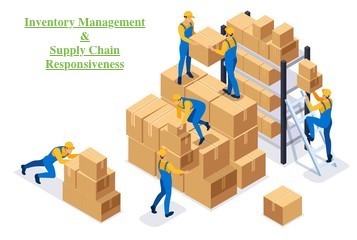
nventory management has always played a key part in any successful supply chain process. Managing inventory levels helps companies to swiftly adapt to unpredictable changes within the marketplace. Volatile demand can cause troubling issues when not handled correctly. That undermines supply chain performance and customer relationship management. When there are weaknesses in how managers link warehouse operations and manage supply chain innovation, the risk increases. In fact, 56% of business leaders still report inefficient inventory management capabilities, asserts Forbes. Let’s take a closer look at how your company can improve inventory management to boost customer experiences, purchase orders, and small business efficiencies.
The Importance of Inventory Management in Public Warehouse Operations
Digitization and automation are at the heart of ongoing growth and recovery and can help businesses overcome common warehousing and inventory issues. For instance, let’s say you are a company that sells seasonal jackets. Due to an unusually warm winter, your winter jackets no longer sell as expected.
Without adapting to the current demand, your winter jackets will become excess inventory over time. Using up public warehouse space to sort, organize, and store excess inventory can get costly.
These negative effects could have been prevented with an adaptive and responsive supply chain across all industries. Knowing how to link warehouse centers, supply lines, and shipping lanes efficiently can improve management and logistics for supply chains.
For example, retail and spa warehouse needs may vary greatly, but they all must still rely on data to track operational efficiency. It is crucial for all businesses looking to scale, to understand the importance of having the ability to shift production toward demand.
Steps to Take for Better Supply Chain Responsiveness And to Link Warehouse Operations
Correctly managing inventory levels and knowing how to effectively link warehouses requires a responsive supply chain, but what exactly does that mean?
According to IGI Global(n.d.), a strong supply network can be defined as a supply chain that is able to shift its production to unpredictable customer demand. How do supply chains do this?
One way to realize a responsive network is to correctly manage logistics warehouse and inventory levels..

Boost Inventory Management
Correctly managing Inventory levels can be a struggle, depending on the marketplace and products in question. See below the best ways you can effectively improve your inventory management by making your logistics warehouse processes more responsive.
Working with the best fulfillment partner can ensure inventory management remains front and center at all times. It allows companies to better regulate inventory and keep up with critical supply chain processes. This focus makes optimization and responsiveness much easier.

Improve Supplier relationships
Products that require multiple raw materials or parts from different suppliers are heavily reliant on active supplier relationships. Companies that trade in those products ought to continuously look for ways to improve their supplier relationships, including public warehouse access and utilization.
Having a better understanding of your supplier’s business position (and vice versa) allows a company to better anticipate and forecast possible disruptions and improve the way they coordinate and link warehouses and other applicable chain parties. This maximizes the throughput speed at which new materials can be ordered and received, in turn increasing your adaptability to the marketplace. Having access to the best supply chain tools can also help significantly. .
Figure 1(Supplier Relationship Management) Significance of Healthy Supplier Relationship. (n.d.). from https://www.strategicsourcing.pk/2015/12/significance-of-healthy-supplier.html
Enhance Risk Management
Another way to improve inventory control and build supply chain responsiveness is through effective risk management. Especially in turbulent times and strong unforeseen events such as COVID-19, the element of risk management is crucial for any business looking for ways to boost logistics warehouse operations and streamline operations.
Especially for SMEs (Small-Medium-Enterprises) looking to invest in new technology, a detailed risk analogy of the sought-after investment must always be made prior to continuing business. Automation and digitalization are important elements in linked warehouses nowadays. Despite the importance of these elements, never invest without proper risk-return analysis.
Consider Outsourcing Options
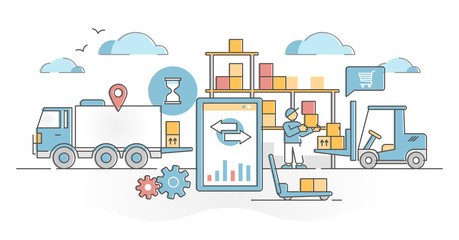
A method to the improvement of performance and inventory management that has become increasingly popular over the years is the concept of outsourcing. Companies such as ModusLink are industry experts with years of industry experience and knowledge regarding public warehouse and inventory management processes.
Companies that rely on warehouse and distribution services need sound logistics warehouse management processes. Without a solid foundation, the entire network will struggle from the start. For many companies, the easiest solution to this shortcoming is to outsource services.
Looking Forward to Future Growth and Success
Some companies today can also be price-competitive, increasing the attractiveness of outsourcing your supply chain. These companies use their extensive network, supplier relationships, and vast IT infrastructure to massively increase supply chain responsiveness and inventory management processes. They understand the importance of linked warehouse operations.
Companies that outsource effectively gain the ability to spend resources elsewhere. This allows their business to flourish in a short-time period and more importantly, increases their ability to scale effectively. The effects of COVID-19 have forever changed the market and how consumers shop, which has forever altered how inventory management and supply chain responsiveness is measured.
Improve Logistics Warehouse Operations With ModusLink
These three elements are important ways to Increase a supply chain’s responsiveness and in turn, increase inventory management. There are plenty of other ways a business can improve its supply chain strategy and boost the ability to link warehouses effectively.
Would you like to know more about these innovative strategies and how to improve supply chain operations with enhanced inventory management? Contact ModusLink today to learn more and to see how easy inventory management can be when you have the right tools and guidance!
Bibliography:
Amsler, S., O’Donnell, J., & Cole, B. (2021, February 11). inventory management. SearchERP. Retrieved November 24, 2021, from https://searcherp.techtarget.com/definition/inventory-management
Significance of Healthy Supplier Relationship. (n.d.). Strategic Sourcing. Retrieved December 3, 2021, from https://www.strategicsourcing.pk/2015/12/significance-of-healthy-supplier.html
Walts, A. (2021, October 29). Your Essential Guide to Effective Inventory Management + 18 Techniques You Need to Know. The BigCommerce Blog. Retrieved November 21, 2021, from https://www.bigcommerce.com/blog/inventory-management/
What is Responsive Supply Chain | IGI Global. (n.d.). IGI. Retrieved December 3, 2021, from https://www.igi-global.com/dictionary/building-a-strategic-framework-for-retail-supply-chain-analytics/52748