
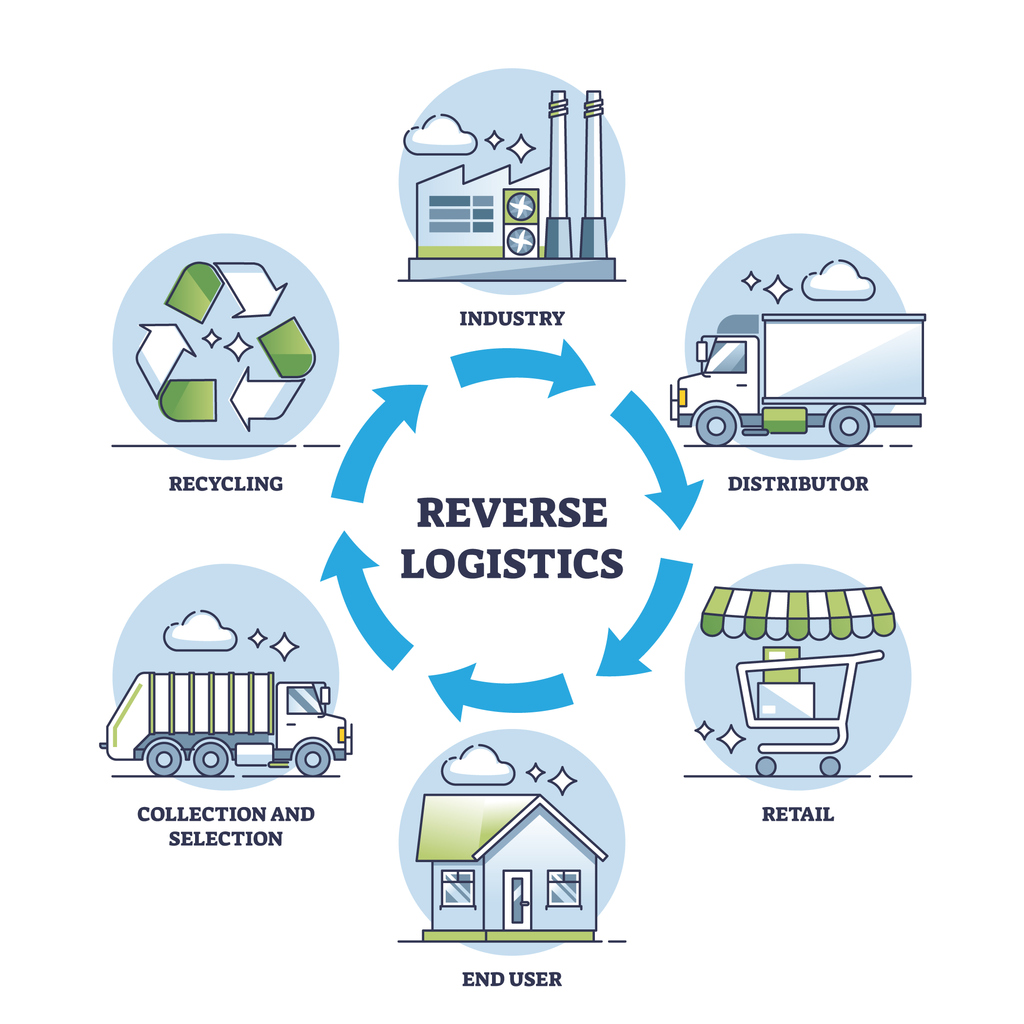
The Reverse Logistics Market is valued at USD 860.4 billion in 2025 and is projected to grow at a CAGR of 9.8% to reach USD 1.99 trillion by 2034. The market is being reshaped by the surge in online purchases and try-before-you-buy models, rising sustainability commitments, and extended producer responsibility frameworks that push closed-loop flows. This evolution is redefining how businesses manage returns, refurbishments, and recommerce, turning what was once a cost burden into a strategic advantage.
Key Growth Drivers
Expanding Recommerce Channels
Recommerce is becoming mainstream as brands embrace resale platforms and marketplace partnerships to monetize returns. This shift not only reduces waste but also creates new revenue streams. By refurbishing and reselling returned products, companies can extend product lifecycles and support circular economy initiatives
AI-Driven Disposition Decisioning
Artificial intelligence is revolutionizing reverse logistics by enabling intelligent disposition decisions. Advanced systems now determine whether returned items should be refunded, repaired, refurbished, or recycled—optimizing recovery rates and reducing unnecessary touchpoints. This capability reduces operational complexity and accelerates turnaround times, which is critical in high-volume e-commerce environments.
Automation for Efficiency
Automation is no longer optional—it’s essential. Vision-based grading, automated bagging, and robotics are accelerating throughput and reducing labor variability. These technologies ensure consistency and scalability in handling high return volumes, while reducing human error and improving cost efficiency.
Emerging Trends
Sustainability as a Differentiator
Environmental responsibility is now a key factor in provider selection. Practices like landfill diversion, carbon-aware routing, and recycled packaging are shaping competitive advantage. Brands are increasingly prioritizing partners that can help them meet ESG goals while maintaining operational efficiency.
Omnichannel Returns
Consumers expect convenience. Box-free drop-off, parcel lockers, and dynamic return policies enhance customer experience while mitigating fraud risk. Retailers and logistics providers are investing in technology-driven solutions to deliver seamless omnichannel experiences that balance flexibility with security.
Hazmat & Battery Complexity
The rise of electric vehicles and regulated goods introduces new compliance challenges. Specialized handling for EV batteries and hazardous materials is critical for safety and regulatory adherence. Providers must invest in certified processes and infrastructure to manage these complexities effectively.
Regional Insights
- North America: High e-commerce penetration drives box-free returns and near-market refurbishment.
- Europe: Strict producer responsibility rules push repairability and recycling, especially for electronics.
- Asia-Pacific: Fragmented flows demand localized repair clusters and automated grading.
- Middle East & Africa: Infrastructure development focuses on parcel lockers and bonded facilities.
- South & Central America: In-region refurbishment and regulatory clarity on e-waste are key priorities.
These regional dynamics highlight the need for global providers to offer localized solutions that meet compliance requirements and consumer expectations.
Why It Matters
Reverse logistics is no longer a cost center—it’s a strategic lever for margin improvement, customer loyalty, and sustainability goals. Companies that embrace AI, automation, and circularity will lead in this $1.99 trillion market.
ModusLink is uniquely positioned to help brands succeed in this evolving landscape. With end-to-end reverse logistics solutions—including intelligent returns management, automated processing, recommerce enablement, sustainable packaging, and global fulfillment—ModusLink transforms returns into a competitive advantage. By combining advanced technology, global infrastructure, and ESG-driven practices, ModusLink empowers businesses to reduce costs, recover value, and deliver exceptional customer experiences while meeting sustainability objectives.
👉 Contact ModusLink today to discover how we can help you design flexible, resilient, and future-proof supply chain solutions tailored to your business.
Bibliography
Sources:
This blog is based on insights from Research and Markets’ report: “Reverse Logistics Market Outlook 2026-2034: Market Share, and Growth Analysis” (November 13, 2025). For the full report, visit Research and Markets.
👉 Contact ModusLink today to discover how we can help you design flexible, resilient, and future-proof supply chain solutions tailored to your business.
Microsoft 365 -Copilot
Disclaimer:
Content is the opinion of ModusLink Corporation and is not intended to act as compliance or legal advice.